
In May, I participated on a panel chronicling how high achieving P’urhepecha migrants overcome academic obstacles. The stories shared were inspirational; a Harvard graduate going on to medical school after being raised by a single mother, an Electrical Engineer raised in Tijuana and educated at one of the most competitive tech schools in California, and me, the daughter of migrant farmworkers who became a Stanford graduate and then acquired a Ph.D. from the best public university in the world. The moderators asked me to share how I navigated institutional barriers to reach my goals and the factors which motivated me to chart my own path as the first person in my family to ever graduate from high school and attend college. I shared the great sense of responsibility that my mother and my community instilled in me; I was taught to pursue and take advantage of opportunities because, as my mother advised, education is the only inheritance that a poor person can have. I mentioned that I had great mentors who opened doors for me and that I aspired to do the same, particularly for younger Indigenous scholars in academia. The moderators congratulated me and applauded my tenacity. I explained that I was not just a first gen lone wolf award-winning superhuman student. My success was a community effort. And, I had great mentors.
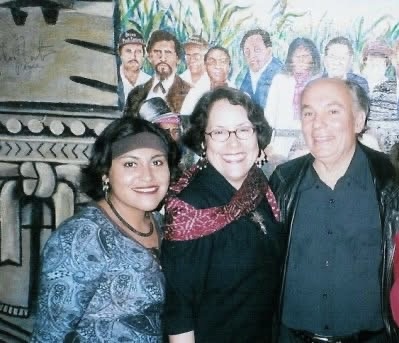
The morning after the panel, I received the devastating news that my lifelong mentor Renato Rosaldo started his journey to Cumiehchucuaro (the next life in the place where the dead dwell). I knew that Renato was ill, but I had faith he was recovering, and I planned to make the journey to New York to visit him in September, to see him again. I was heartbroken beyond words; it was hard to accept that this man who had changed everything about the course of my life had passed away and would now permanently be a part of my past. My past. I had to let that reality sink in as I always considered him to be an important figure in my present and wished for him to continue being part of my future. This is what it’s like to lose a beloved mentor; your world is shaken from underneath you as you sit and reflect on how this person whom you met by chance changed your life, and you question how you will continue pursuing your goals without them being part of your future. Renato was all of that to me and to many others.
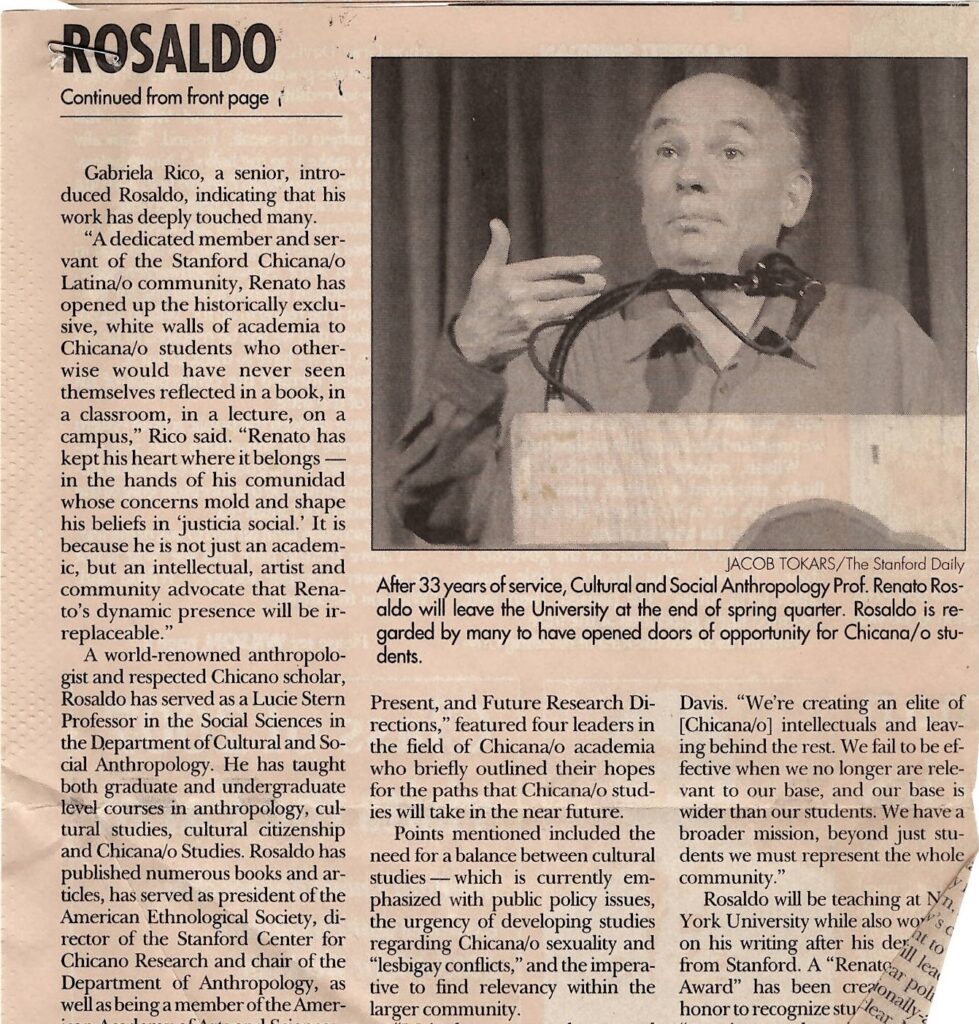
Renato was one of the first Chicanos, Mexican Americans, to ever receive a Ph.D. in Anthropology when he finished in 1971. Shortly after I met him, he told me the story about being one of the only Mexicans on Harvard’s campus, such a rarity he was that when his white peers spotted another Mexican on the campus, they brought him to Renato and said, “we found another one.” Renato was a gem as a teacher. I am lucky to have experienced his lectures and instruction during my first year at Stanford in the late 90s, when I enrolled in the course he co-taught with the brilliant Yvonne Yarbro-Bejarano, Introduction to Chicano Studies. Trained by college preparatory programs and fresh out of migrant education, I took voracious meticulous notes, but I would pause every time Renato said “Chicano Studies.” I remember the conviction with which Renato pronounced the name of our field: Chicano Studies. Every syllable was uttered meticulously and with purpose, displaying the great respect he had for the discipline and the love for the field he wished to instill in us as his students. Renato was informed by Chicano Movement politics and he applied the framework of radical support for his students. His mentees will repeat these words about him: he was not only a brilliant scholar, but also a generous Professor and a caring, intentional mentor.
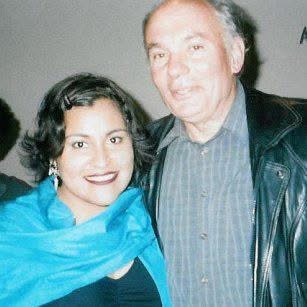
When I enrolled at Stanford, I was embroiled in culture shock. I came from the working class predominantly Mexican immigrant community of Nipomo-Santa Maria onto a campus where some of the dormitories had assigned chefs and where even the students of color came from privileged backgrounds. I paid attention so I could adjust to my new home and I remember some of the advice I received from older peers: they told me not to be star-struck by the prestigious and famous faculty members who taught our classes. This was a difficult feat as I recall being intimidated by professors like David Kennedy who had written my AP history textbook, and was now my freshman seminar professor leading fireside discussions on American literature over dinner at his home. This ritzy Stanford environment was daunting to me. I was a humble first generation daughter of farmworkers just getting used to being around middle class and wealthy people, yet I never felt intimidated by the brilliant and respected Renato Rosaldo.
Renato broke down barriers. He was warm and kind on a campus that seemed completely foreign and distant to Chicano students from the barrio, literally and metaphorically. Stanford was only five hours away from my community in the Santa Maria Valley, but it might as well have been a world apart. Yet, while knocking on Renato’s door during his office hours, naive and inadequate as I felt, I somehow knew that this man would not look down on me for where I came from because it was apparent that he viewed my background as a strength. With the characteristic twinkle in his eye and vote of confidence in his warm smile, Renato made me feel brave.
I sought out Renato’s advice because I wanted to study a Pueblo community in New Mexico, which I had heard was similar to P’urhepecha communities in Michoacan. Sifting through books to give me from his shelf, Renato told me to “just go to Michoacan.” He supported my application for the Mellon Mays fellowship and other grants so I could return to Mexico on my terms, to study my ancestral culture through a contemporary lens. As a first generation student, I would not have imagined myself as a researcher. Yet, he told me I was the ideal person to ask the questions I had, that I had the talent as a thinker to analyze the answers, and the grit and integrity as a writer to turn what began as a summer homecoming into an honors thesis.
Renato advised my thesis through what was a grueling research and writing process. It’s like he could recognize that I was a perfectionist who cared too much about my work, and he didn’t mind applying the patience and effort it took to mentor me while pushing me to produce my best writing. I belabored my Honors Thesis. The high stakes of representing P’urhepecha women’s struggles weighed heavily on my mind while ethical questions over what to share and how to analyze my findings wounded my heart. These challenges, which BIPOC and Indigenous researchers uniquely understand, have been constant obstacles in my writing process. Renato’s belief in me didn’t falter. When my friend Itzolin died, I had to ask for an extension on my deadline because I physically lost the ability to write. I could not see the computer screen through an endless stream of tears muddying my vision while mourning Itzolin. Renato did not make me feel ashamed for needing the time I needed to grieve. He supported me through my grief with compassion and, along with Yvonne, nominated my Honors Thesis for a university-wide award when I finished it.
So steadfast was my dear mentor’s belief in me and in the value of my work that I was able to fathom myself a young researcher who could go on to achieve a Ph.D. On the day of my graduation, Renato was running across campus with my family – a group of more than twenty Mexicanos rushing together in unison from one side of the Stanford campus to another – jumping from graduation events to awards ceremonies to collect all the awards for which he had nominated me. It mattered so much to me that, despite his busy life as a researcher, Professor, artist, spouse and parent, he wished to be present for my big moments. He was the faculty member who showed up when I invited him to mentor recognition dinners at the Native American Cultural Center and to poetry readings at El Centro Chicano. My parents loved him. So, how exactly do we (those 20+ Mexicanos in my family who ran around campus on the day of my graduation) mourn this man who changed my life in these key moments?
Through the distance, after Renato left Stanford for New York City and I was accepted to the historic Ph.D. program in Ethnic Studies at U.C. Berkeley, Renato remained my mentor. Early on in my graduate school career, I wavered on my research focus, yet my search for home as a migrant led me to return to work with P’urhepecha communities. When I asked Renato to join my dissertation committee as an external expert, he happily agreed even though he was already retired. His imprint on my dissertation work, from the formation of my questions to my methodological approaches and my analytic framework, is significant. I could not imagine finishing my Ph.D. without his guidance and, along with the amazing scholars I was fortunate to have on my committee, he read my dissertation with care and generosity. As my career took off on the tenure track, I continued to notify him of small and larger victories, that I won this fellowship or that grant, that I raked up leadership positions and campus-wide recognitions. His responses were always encouraging. I felt the glow I felt when I first walked into his office every time he emailed me back telling me he was proud of me. A part of me will always want to know what Renato thinks; a part of me will always be the young girl seeking my mentor’s guidance and praise – because I know that with his mentorship, Renato offered me his heart as he did to so many other students. So, how do we show gratitude and say goodbye to such an impact?
I have been asking myself these questions as I’ve grieved Renato over the last two months. How I wish I could have visited him even though he always made me feel supported through the distance and as the years went by, how he was happy to hear about my personal milestones like giving birth to my daughter, and he encouraged me relish in the joy of those moments. As I’ve grieved, I’ve thought heavily about his children, about our beloved Mary, and his family. I could tell by the photos that his life in retirement was so full and happy. I know he was grateful for all he had the opportunity to live on this earthly plane with his loved ones, that he was always in the best company, that he had not stopped writing as I continued to buy his books of poetry. Yet, I regret that I ran out of time to see him again, to tell him again, as I had all these years over email, how much I appreciated every piece of advice, feedback and cariño he ever gave me. I study death and mourning. Renato studied and wrote about grief and poetry. So, I find myself returning to his work, seeking advice on how to grieve openly and with ritual as a Mexican, yet intentionally, thoughtfully and poetically as an antropoeta. I want a stroll in New York City to attend one of his poetry readings. I want a cafecito or tea on a warm afternoon with Renato and Mary to catch up and talk about the strides and downfalls of this world and our profession. I won’t get to have those visits with him being present in the earthly plane, yet as a poet, I know I can continue to create new visits by sitting with his writing.
So fittingly, it’s been my own mentees, Central American, Chicana/o, and Mexican Indigenous scholars starting their own careers as Professors who have held my hand through the grief, who have offered their support and have sent me words of comfort as I’ve weathered the loss of my mentor. They remind me that there would not be them without me as I know that I would not be who I became without Renato. I cherish that I am a part of his legacy.
My book on mestizaje, mourning, and melancholia comes out next year. I know that Renato will be celebrating from the cosmos and sending me blessings from the ancestral realm. I know he was happy I was finishing a book that took me 15 years of ethnography while working in a conflict zone, and the blood, sweat, and tears of pouring over every detail, to write. As I prepare to release my life’s work into the world, I am so proud to be part of Renato Rosaldo’s legacy. I am so proud to have been his student, his friend, his fellow poet, and his Chicana/o Studies colleague, his mentee. His work will continue to shape my questions and my journey as an antropoeta. And so, there is no reason to say goodbye, because when a poet transitions into the next life (as much as I would like to imagine him departing in a classic car with sunglasses on), it’s never actually goodbye. For us, it’s “ay nos watchamos,” or “Adelante, poeta…caminante de la vida que así fuiste tu Renato, caminante: no hay caminos, se construyen al andar.”
I am not sure what mourning and rejoicing in community the memory of this trailblazing Chicano anthropologist, poeta of the people, will look like, but I know that like when Itzolin went, it will involve floricanto, a bit of mezcal, and lots of poesia.
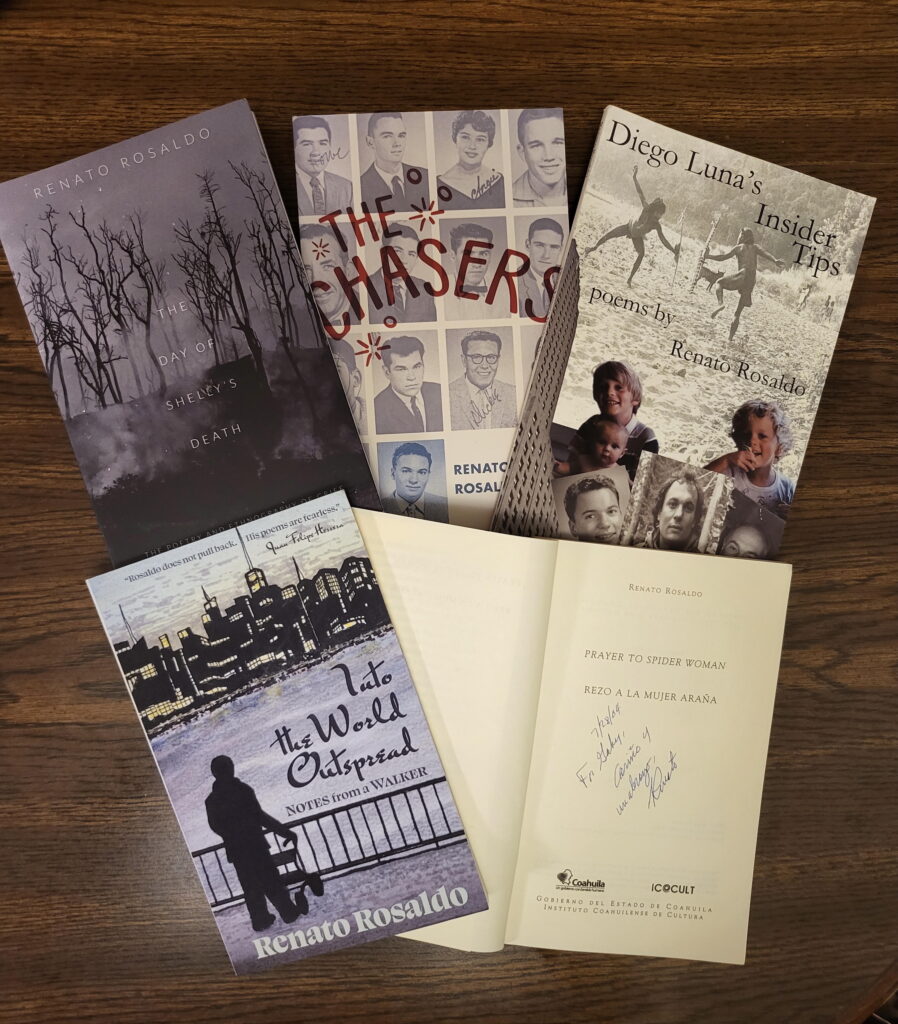
And so it was that Renato took me under his wing. We had originally bonded over both being poets and we read our poetry together in the Stanford Chicana/o stage and published our pieces on the pages of expresión! magazine. Renato had deep emotional intelligence and he connected with student-artists on a personal level. I enthusiastically shared with him my bad Chicano protest poetry and my stronger poetic groundings as I wrote about Michoacan. Renato gifted me his first poetry book, Prayer to Spider Woman, yet I remember the moment he handed me his copy of Culture and Truth from his own bookshelf, along with a copy of Jose Eduardo Zarate Hernandez’s Ser Indio Otra Vez, all texts that would become formative to my work.
I was not an anthropology major, yet Renato taught me how to conduct ethnography. He pointed me to the methodological handbooks I needed to study to learn the craft – everything from how to take field notes to how to develop functional writing habits. He reviewed my interview questions before I went into the field, and he gave me tips on how to conduct participant observation as a person studying my own community. Beyond this, Renato believed in my ethnographic sensibilities; he commended my conviction in the ethical commitments I was prepared to make to the communities I worked with. He celebrated my poetic voice and told me to conduct ethnography from my creative intuition – to interpret and write poetically rather than academically, to follow my gut feelings. As an antropoeta, Renato had been challenging the construct of objectivity in anthropology for decades; he taught me to embrace antropoesia as method and to compose antropoemas in my field notes unapologetically before he had fully theorized the approach. He preached and practiced affective thinking or what Chicana feminist Cherrie Moraga (my femtor) called ‘theory in the flesh’ within anthropology during a time when embracing emotions in ethnographic research was still taboo.